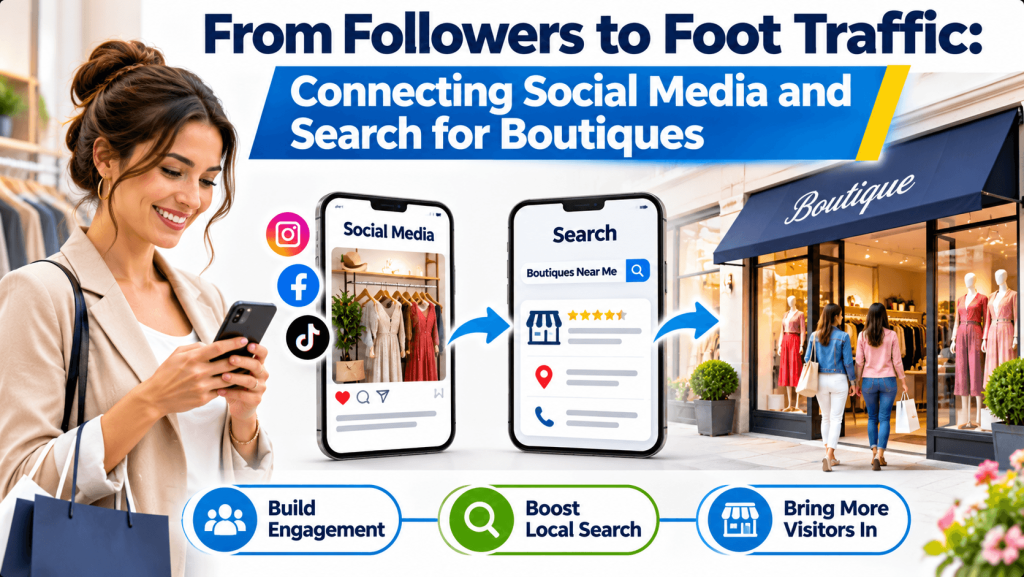
A clothing boutique in Scottsdale has thousands of Instagram followers who love its styled outfit posts. Yet when the owner asks shoppers how they found the store, many say they simply searched for "women’s boutique near me" while visiting the area. Few mention Instagram at all.
Social media builds interest, but search and listings often turn that interest into a store visit. Boutiques and local designers do best when both work together.
Make Social Profiles Point to Real Information
Every social profile should clearly show your store address, hours, phone number, and website. Many followers discover you online but don’t realize you have a physical shop. Add your location to posts featuring new arrivals, and remind followers when you’re hosting in-store events or trunk shows.
Use the link in your bio wisely. Instead of linking only to your online shop, consider a simple page with options for shopping online, getting directions, and viewing store hours. When you post a new arrival, mention whether it’s available in store, online, or both, so local followers know whether a visit is worth the trip.
Bring Your Style Into Search Results
Shoppers searching nearby often see your Google Business Profile before your social feed. Fill it with the same high-quality photos you use on Instagram, including store interiors, displays, and seasonal collections. Describe what makes your boutique distinct, such as size-inclusive collections, local designers, sustainable fabrics, or bridal accessories.
Your website should include text descriptions of the brands and styles you carry. Images alone don’t tell search engines, or shoppers using screen readers, much about your collections.
Keep the Experience Consistent
When a follower searches for your store, every result should match. The same business name, address, phone number, and hours should appear on your website, social profiles, map listings, and directories.
Directories that organize fashion businesses by category give shoppers another place to discover you. A profile in the Get Listed Inc clothing and designers directory helps people looking for local boutiques and designers find your shop and confirm your details. Use photos and descriptions that reflect your current style so the listing feels like an extension of your brand.
Conclusion
Social media sparks interest, while search and listings help people actually visit. Connect your profiles to real store information, bring your visual style into search results, and keep details consistent everywhere, including on Get Listed Inc. That combination helps loyal followers become customers.
Frequently Asked Questions
Should my boutique post the same photos on Google and Instagram?
Using some of the same high-quality images is fine and helps keep your brand consistent. Focus Google Business Profile photos on what shoppers need to know: your storefront, interior, displays, and current collections. Instagram can feature more styled outfit content and behind-the-scenes posts.
How can I tell if social media is bringing customers into my store?
Ask shoppers how they found you, track redemptions of social-only offers, and watch for spikes in store visits after specific posts or events. Website analytics can also show traffic coming from social platforms. Combining these signals gives a clearer picture than follower counts alone.
Do I need a website if my boutique sells mainly through Instagram?
A website gives you a stable home for store details, policies, brand story, and product descriptions that social platforms can’t fully replace. It also gives your listings and directories a consistent place to link. Even a simple site helps customers find and trust your business.
What should a local designer include in an online listing?
Include your business name, studio or shop location, hours or appointment availability, contact details, and a clear description of what you design, such as custom bridal wear, alterations, or ready-to-wear collections. Add recent photos of your work so shoppers can judge your style quickly.