An event venue in Kansas City books a popular local band for a Friday night. The show is announced on social media, but ticket sales stay slow. Later, the venue owner learns that many people searching for "live music this weekend" never saw the event because it only appeared in a social post that disappeared from feeds within a day.
Event venues, organizers, and planners often put great effort into the event itself but less into making it easy to find online.
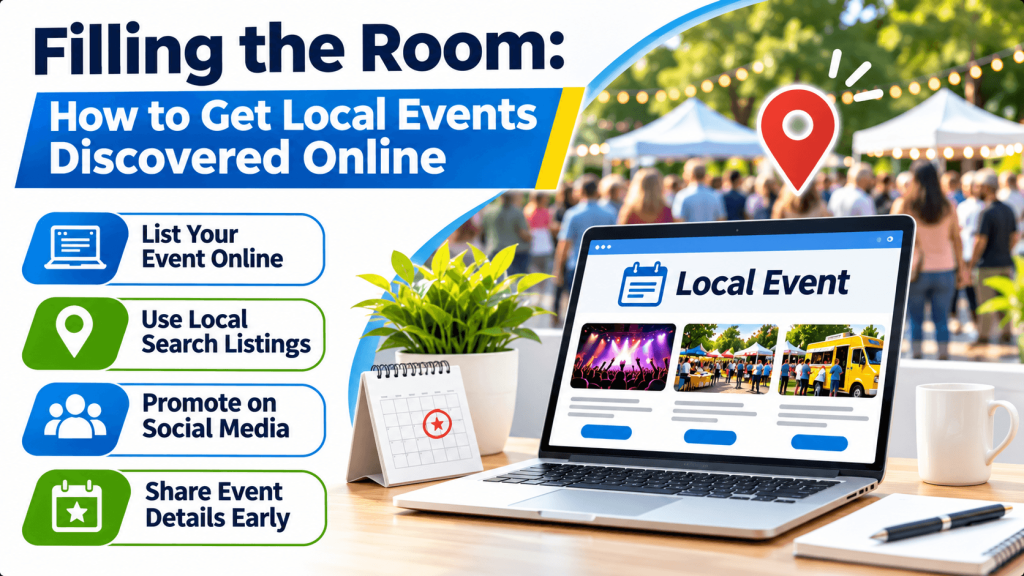
Give Every Event Its Own Page
A dedicated page for each event on your website gives people a permanent place to find details. Include the event name, date, start and end times, location, ticket prices, age restrictions, accessibility information, and how to buy tickets.
Write a short description that tells people what to expect, whether that’s a jazz trio, a craft fair with forty local makers, or a networking breakfast for small business owners. Clear details help people decide quickly and share the page with friends, coworkers, or family members.
Help Search Engines Understand Event Details
Google supports Event structured data, which is code that describes an event’s name, date, location, and ticket information in a format search engines can read. Many website platforms and event plugins can add this automatically. It doesn’t guarantee special placement, but it reduces confusion about when and where your event happens.
Keep every event page updated. If an event is postponed, canceled, or sold out, change the page right away and update the structured data. Outdated event information frustrates attendees and can lead to complaints.
Share Events Where People Look
Local community calendars, chamber of commerce event pages, neighborhood newsletters, and ticketing platforms all reach different audiences. Post your events in the places that match your crowd. Use Google Business Profile posts to highlight upcoming events for people viewing your venue’s profile.
A business directory profile also helps people find your venue between events. A listing in the Get Listed Inc events directory can help planners searching for local event spaces, organizers, and services discover your business. Keep your contact details and website link consistent with your other profiles.
Conclusion
Events succeed when people can easily find the details and decide to attend. Create clear event pages, use structured data where possible, and share events through community channels. A consistent profile on Get Listed Inc helps planners and guests find your venue year-round.
Frequently Asked Questions
What is event structured data?
It’s code added to an event page that describes details like the event name, date, location, and ticket information in a standardized format. Search engines can use it to understand your event more accurately. Many content management systems and event plugins can add it without custom development.
Should every event have its own web page?
Yes, for public events you want people to find. A dedicated page gives search engines and attendees one clear source of information, and it can be shared easily. Social media posts help with promotion, but they shouldn’t be the only place event details live.
How far in advance should I promote a local event?
It depends on the event. Small community events may need two to four weeks of promotion, while ticketed concerts, conferences, or festivals often benefit from announcements several months ahead. Publish the event page early, then increase promotion as the date approaches.
What should I do when an event is canceled?
Update the event page immediately with a clear cancellation notice and refund information. Change the structured data status if your platform supports it, notify ticket holders directly, and update listings on community calendars and ticketing sites. Fast, clear communication protects your reputation.